

With a major in psychology and a minor in bible studies, Ken Tracy graduated from Cincinnati Christian University, where he met his wife, Libby. His first job was serving as a youth pastor in Amelia. He also took on sports coaching at local schools. Somewhere along the line, he was asked if he had ever done project management because he was seen as someone who was quite effective at taking on projects and getting them done efficiently. Thus began the launch of his corporate career in various positions and companies over the years, and even served as vice president of Fluor Corporation, a global engineering and construction company.
In 2006, while having a casual conversation with his brother-in-law, who is an anesthesiologist in Cincinnati, he heard him talk about the challenges of hospital staffing, given that patient census changed day to day, making it difficult to predict staffing needs. Tracy took that bit of information seriously and wrote up a business plan on how that issue could be solved, and with that, he and his wife launched TaleMed, a medical staffing company. They started out with four employees, and after 15 years of successfully running the business, with 4,000 employees later and the sixth-largest in the country, they sold a portion of their business and merged with another company. Remaining on the board, Tracy stepped down as CEO. Now at age 60, instead of asking where they should retire and travel and golf, Ken and Libby Tracy asked themselves what they were called to do to be of service.
Over the years, as Ken Tracy continued coaching and his wife served as the church youth coordinator, they witnessed families in poverty and the effects on children. They wanted to see how they could contribute to help end the cycle of poverty and launched their idea of a food market and health care facilities located in one building to serve community members in need, and thus, Impacting Tomorrow was founded.
Ron Tracy’s business acumen, from years in the corporate world, knew data collection was key to seeing how they could go about it. With sophisticated information technology IT applications, they wanted to be able to track all services, their impact, and where the needs are. He runs it like a business making the most use of the money and looking at it through the lens of donors making investments and expecting a return on their money, which is a social return to help break the cycle of poverty.
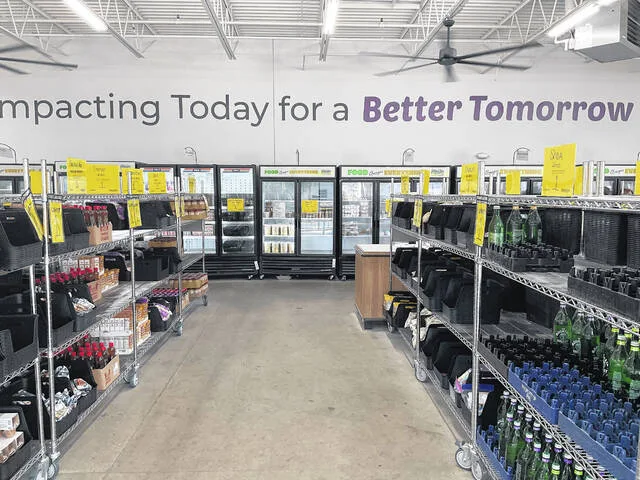
Their goal was to offer services in a dignified, respectful way, and to help educate people on their path. The first thing they looked at was the quality of food they wanted to be able to offer. Fresh produce was at the top of the list. Next were frozen vegetable choices, rather than canned, given that frozen offers three times the nutritional value over canned. They opened a market that consistently offers fresh fruits and vegetables as well as frozen items, milk, eggs, dairy and an array of groceries, pantry items, and household essentials.
Part two of this story will run in the Nov. 5 edition of The Clermont Sun